An AI tool is easy to demo. Showing how it solves a business problem takes more work, and that gap is where enterprise AI adoption either gains momentum or stalls.
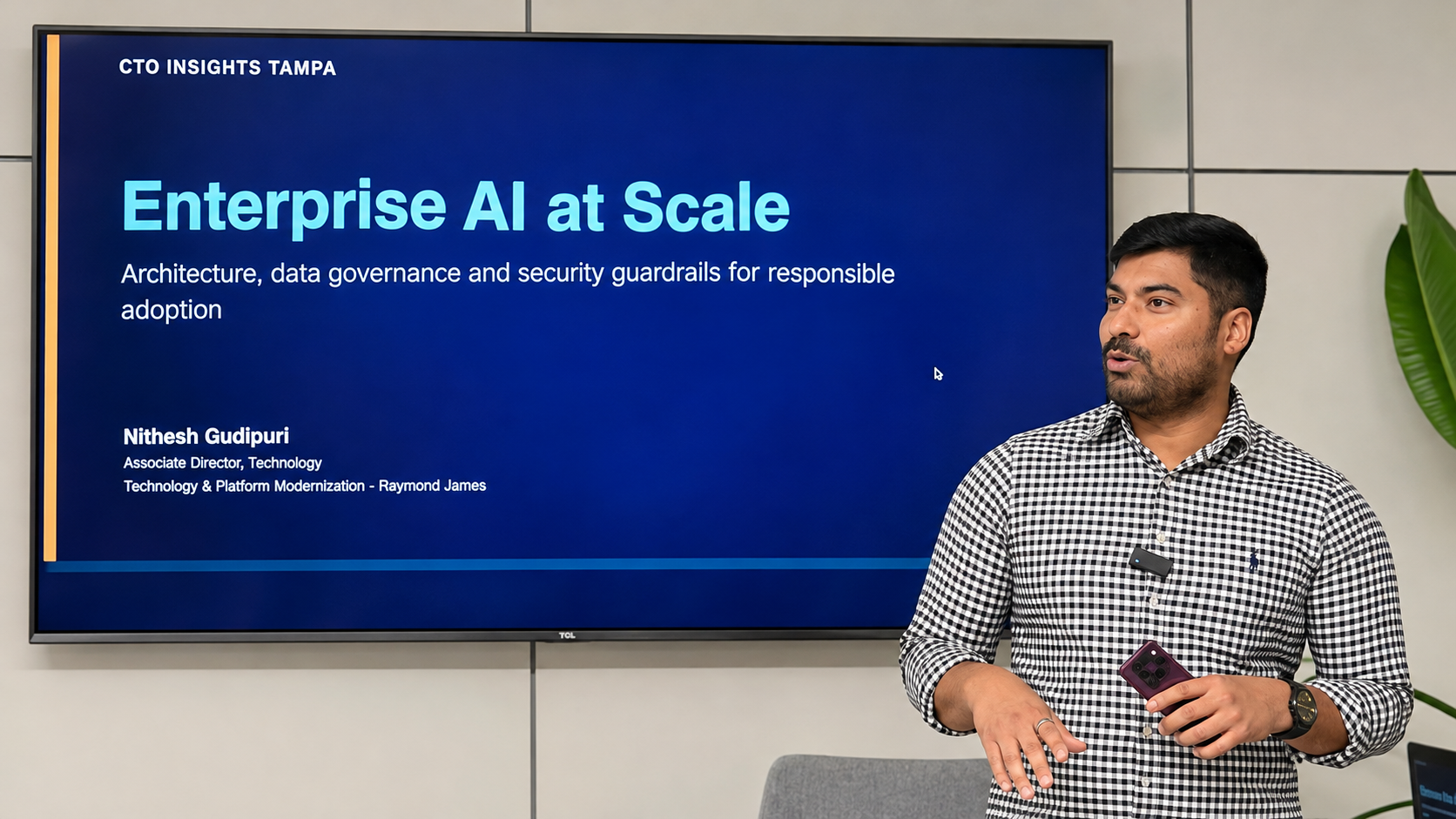
That challenge was at the center of our CTO Insights event on November 10 at NextPath’s Tampa office. Hosted by Aztia, the conversation featured Nithesh Gudipuri of Raymond James sharing his perspective on enterprise AI, from measuring business value to building the controls needed for responsible adoption.
One takeaway stood out: large enterprises and smaller organizations are working through many of the same questions. Where can AI make a meaningful difference? Is the data reliable?
Who is accountable when a tool moves beyond an experiment?
What measurable AI value looks like

As Theo put it, “That is the kind of practical result that matters when the alternative may be waking an engineer at 3:00 AM.” The example made the business case tangible.
It also reinforced the importance of starting with a clear problem and deciding how success will be measured. A promising pilot is a starting point; leaders also need to consider whether the tools, costs, and architecture will fit the business a year later.
Making room for responsible enterprise AI adoption
Governance was another central theme. Theo’s takeaway was straightforward: “Governance should support innovation, not block it.”
That means involving technology, risk, compliance, and business teams in the process. Low-risk experiments can have lighter controls, while applications involving sensitive data or production environments need closer review and clear accountability.
One architectural idea Theo highlighted was routing AI agent activity through a single gateway, allowing policies to be applied and activity to be logged consistently. It was a concrete example of how governance can become part of the implementation.
Shared challenges across Tampa’s tech community
Stephen Rideout, an account director at NextPath, left with a reminder that company size doesn’t remove the uncertainty. Enterprise teams are still figuring out how to use it internally, just as smaller organizations are.
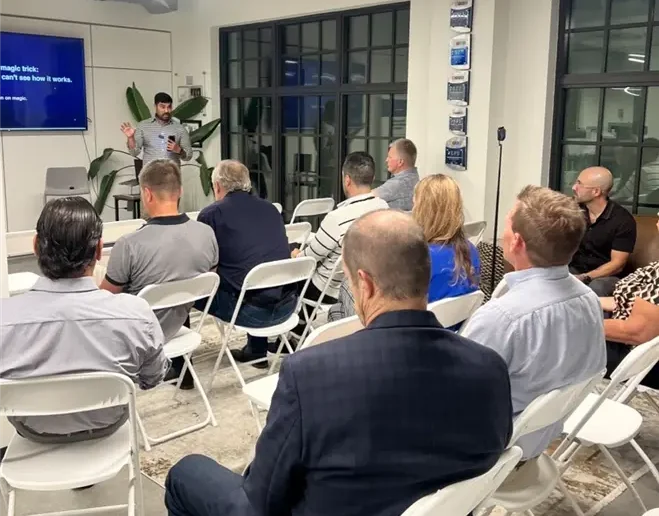 He also highlighted the connections these events make possible: “You might meet a developer or a CTO at these events and they always have great speakers.”
For Theo, the discussion felt more like a working session than a typical panel, connecting business value, data, governance, and architecture with a realistic path toward implementation.
Thank you to Nithesh for sharing his perspective, to Aztia for hosting, and to everyone who joined us at NextPath. We appreciated the chance to hear how others in Tampa’s technology community are approaching these decisions.
If your organization is building the team to lead enterprise AI adoption, NextPath can help you hire a CTO or find a generative AI specialist.
Follow NextPath Workforce Solutions on LinkedIn for takeaways from future CTO Insights conversations and more from Tampa’s tech community.